
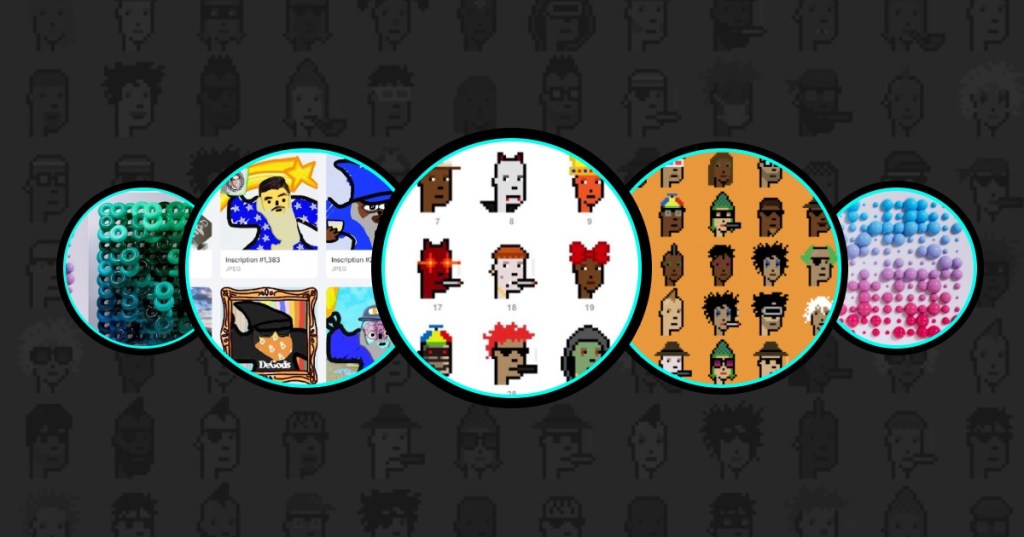
Enthusiastic individuals have discovered a way to create their own unique cryptocurrencies, referred to as shitcoins, and they are quite thrilled about it. The current market shows a significant increase in transaction fees, a rise in activity and the emergence of new startups. These developments have contributed to the revival of the primary market, and interestingly enough, it can all be attributed to bitcoin shitcoins. Here’s a brief summary of what you might have missed.
Let’s delve into the concept of Ordinals.
Ordinals gained immense popularity a few weeks ago, specifically in January 2023, when Rodarmor introduced the Ordinal theory framework. For more information, you can find additional details here. In essence, Ordinals are data blobs embedded within the Bitcoin network. Unlike the majority of NFTs found on platforms like Ethereum, the inscriptions on BTC exist directly on the blockchain rather than being hosted on IPFS or similar solutions.
What makes this intriguing? The sudden rise of Ordinals has had a profound impact on the entire Bitcoin ecosystem. Whether it was the “NFT on Bitcoin” narrative or some other trend of the moment, one thing is clear: there has been a surge in activity, trading volumes, and substantial gas fees. As a result, various wallets, interfaces, data tools, and similar projects have emerged in the primary market, aiming to capitalize on this wave. These developments give rise to a couple of interesting points
– Some key developers, driven by their inherent instincts, have begun to voice their disagreement, stating, “This deviates from the original intent!” Seriously though, they consider it spam and propose treating all such activities as spam. You can find more information from Luke regarding this matter, but let’s disregard the unappealing image of the degods
– On the other hand, miners may not be as bothered. They are finally earning fees, which adds an incredibly intriguing aspect to the debate on the security budget of the 21 million cap. This topic has gained relevance in the recent cycle, given that the primary use case of Bitcoin as a financial store of value doesn’t involve numerous peer-to-peer transactions since people tend to hold onto their assets. Consequently, fees have primarily come from the emission of new coins. Quite amusing, isn’t it?
However, the crowd is clamoring for more excitement!
Gamble, gamble, gamble! You gotta risk it to get the biscuit!
Allow me to introduce the BRC-20 muh standard, a recent development emerging around two months ago, serving as an experimental framework for fungible tokens within the Bitcoin ecosystem. Alternatively, some may perceive it as a deceptive scheme. Let’s skip ahead: BRC-20 tokens leverage Ordinals inscriptions of JSON (JavaScript Object Notation) data to establish token contracts, generate tokens, and enable their seamless transfer. For more details, you can refer to information provided by CZ here.
What makes this particularly intriguing? Individuals familiar with the subject (haha) generally regard the BRC-20 concept as rather nonsensical, even inferior to the previous experiment of Colored Coins. Its decline can be attributed to various factors, including exorbitant gas fees, lack of interoperability, and the skepticism surrounding its narrative during that period.
Countless scamcoins have been created, attempting to sell new worthless tokens to unsuspecting holders who don’t want to miss out on the scamcoin and NFT craze witnessed on the Ethereum platform. To be precise, there are 14000+ BRC-20 Tokens being created as we speak, while their marketcap has surpassed a total of $440 m. (Source)!
Currently, it appears that scamcoins have experienced a rapid decline, but there is still activity among wallets and individuals who are attempting to take action. This suggests that there might be some underlying factors at play.
💭 Food for Thought:
– Does the inclusion of “useless” on-chain data to satoshis through the BRC20 Standard pose any significant drawbacks or challenges for Bitcoin? Is it ultimately detrimental to the Bitcoin ecosystem?
– Are these additional transactions, stemming from BRC220 tokens, creating competition for limited block space? Does this potentially interfere with security 1 sat/vbyte transactions for cold storage funds or establishing lighting channels? Could it be seen as a form of “pollution” to the Bitcoin security model?
Don’t forget the decent threads to recap, example one and two.
💡 Additionally, it’s important to maintain an open mind. It’s possible that the initial lack of success with Colored Coins was primarily a result of poor timing rather than inherit flaws in the architectures and developer experience. Alternatively, these BRC20 tokens might also be perceived as deceptive or counterfeit, but they do enable the integration of Stacks into the mindset of Bitcoin enthusiasts. It appears that Miami is quite enthusiastic about this development.

